Rewriting Utopia: The Venus Project, Earth 2.0, and the Rise of Terra 2.0
Inspired by and expanded from my original long-form essay:
The Venus Project Revisited: From Resource-Based Economies to Terra 2.0
Why Reopen a Dream From the Future
Every few years, certain ideas return like signals from a forgotten timeline. They pulse again because the present is finally able to hear them.
For me, The Venus Project (TVP) was one of those signals. I first encountered it in the late 2000s, during the same period I was developing Earth 2.0 and beginning to articulate what would eventually become Terra 2.0. Back then, Jacque Fresco's vision of a world built on abundance felt radical, almost alien. Today, in an age shaped by artificial intelligence, autonomous production, and planetary-scale coordination, it feels prophetic.
So why revisit this now?
Because the world has changed. Because technology has matured. Because the dream, once stagnant, is ready to evolve. And because my own work — Living the Future, Terra 2.0, the Techno-Terrestrial Threshold — has reached a point where the conversation must include the past that shaped it.
This is not nostalgia. It is reclamation. It is integration.
It is updating a blueprint for an age that no longer accepts static utopias.
My Timeline With TVP: Seeds of a Future Vision
When I discovered The Venus Project, I was a young creator trying to decode civilisation’s trajectory through media, futurism, and philosophical inquiry. Fresco’s city designs, his critique of monetary economics, and his insistence that abundance could be engineered all spoke to something I already felt intuitively.
At the same time, I was shaping Earth 2.0 — my early fictional-universe-meets-strategy concept about a civilisation leap. These two visions ran in parallel for a while. Both were pre-AI. Pre-automation boom. Pre-neural nets exploding into public consciousness.
Looking back, Earth 2.0 was my mythic prototype for what Terra 2.0 would later become: a civilisation not rebuilt, but re-coded.
That is why revisiting The Venus Project is more than an intellectual exercise. It is a return to one of the original signals that shaped my path.
What The Venus Project Got Right
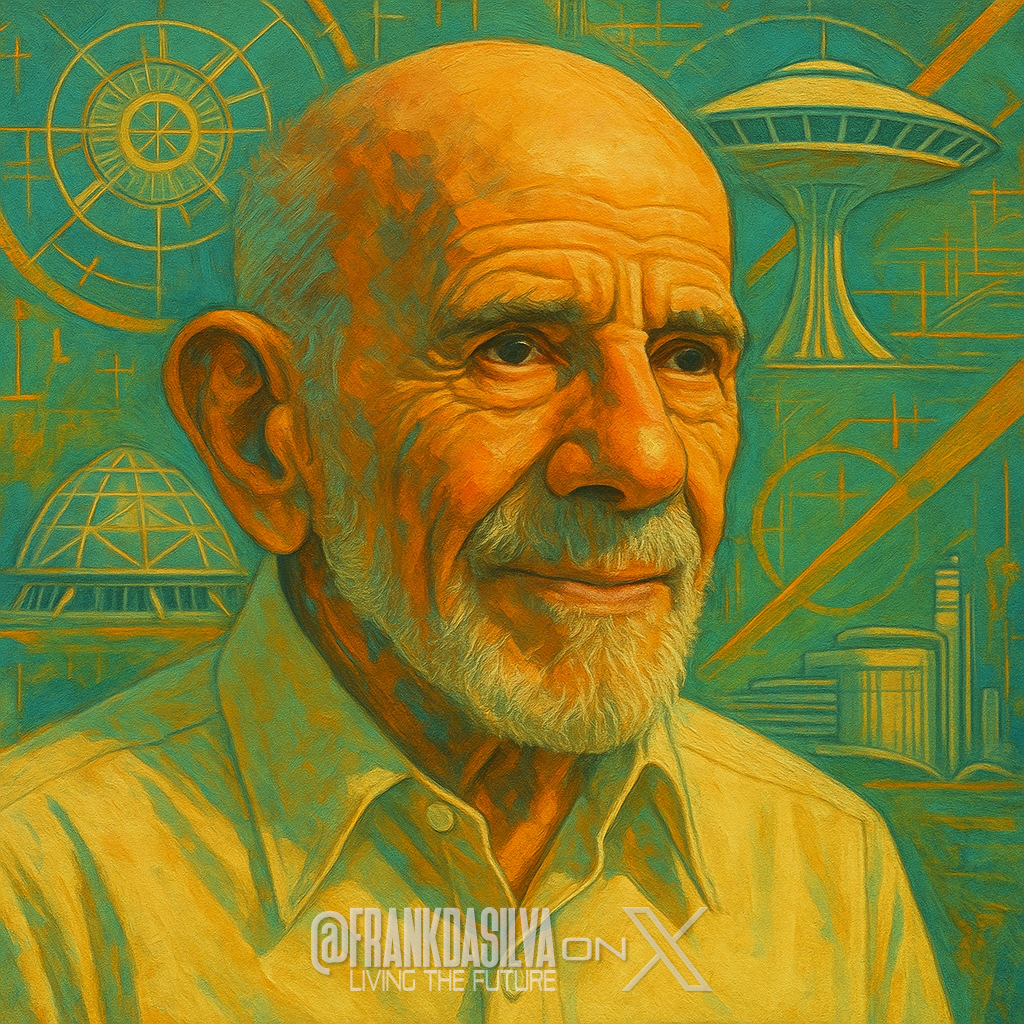
Jacque Fresco (March 13, 1916 – May 18, 2017) was ahead of his time in several profound ways.
1. The critique of scarcity as an engineered condition
Fresco was clear that scarcity was not a natural state. It was an artefact of outdated systems. This insight now feels obvious in an AI-driven world, but it was revolutionary back then.
2. The idea that design can reorganise society
Fresco treated society as a design problem. This is foundational to Terra 2.0, where systems architecture replaces ideology.
3. The intuition that technology changes human behaviour
He understood that tools do not just increase capacity. They change consciousness, expectations, and social organisation. AI is now proving this at scale.
4. The belief in a planetary perspective
Before global coordination became a mainstream idea, Fresco imagined civilisation as a single organism.
These insights still matter. They are the parts of TVP that deserve preservation in a techno-optimistic future.
What They Missed: Why a Resource-Based Economy (RBE) Cannot Work
This is where the reverence ends, and the evolution begins. The RBE concept, while well-intentioned, contains structural flaws that cannot survive real-world dynamics.
1. RBE assumes static equilibrium, not dynamic complexity
The idea requires a perfectly synchronised supply chain, perfect distribution, stable global cooperation, and a static demand pattern. This is incompatible with human behaviour, creativity, and exponential technological change.
Terra 2.0 rejects equilibrium. It embraces dynamic, self-adjusting abundance.
2. It centralises decision-making in a technical priesthood
Even if softly presented, RBE implies a class of engineers maintaining the system. That is a monarchy of expertise. Terra 2.0 decentralises intelligence through human-AI symbiosis.
3. It eliminates markets instead of transcending them
Markets are not the enemy. Friction is. Terra 2.0 reframes markets as evolutionary feedback mechanisms augmented by AI.
4. It does not account for the rise of artificial intelligence
Fresco’s world is automated, but not intelligent. In an AI-rich world, the centre of gravity moves from managing resources to managing meaning.
RBE is too linear, too centralised, too pre-AI.
The Organisational Stagnation of TVP
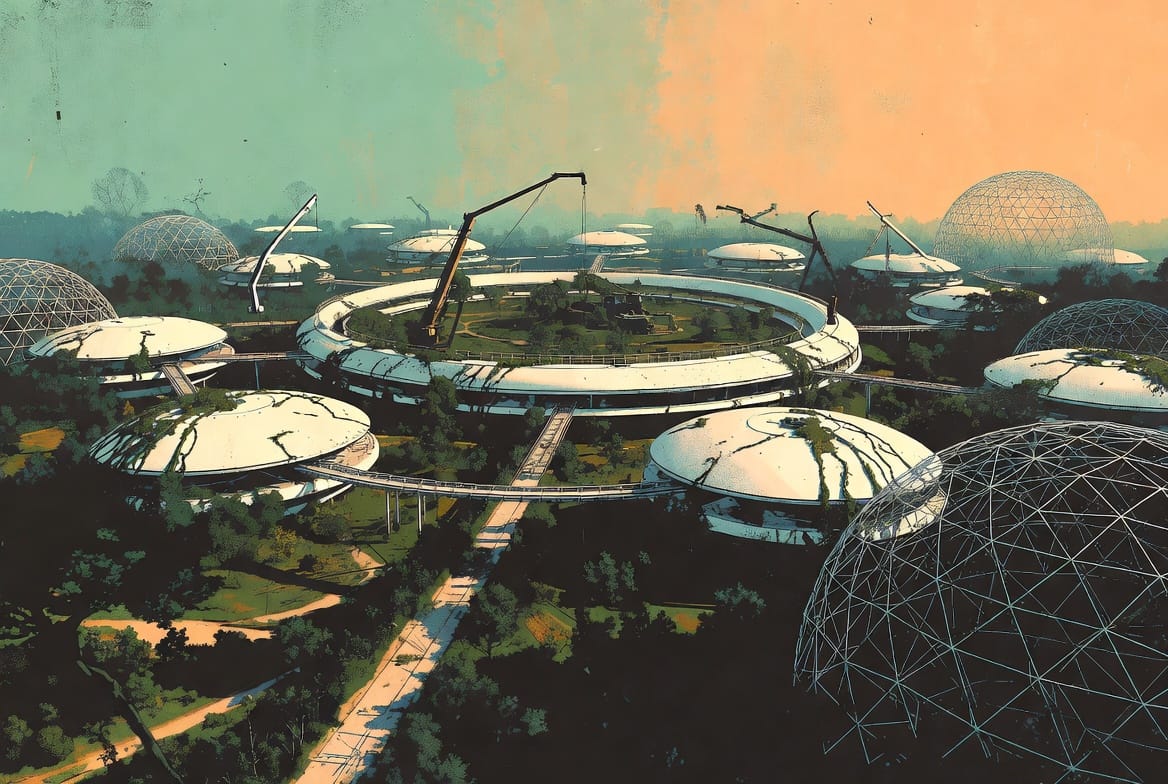
The Venus Project, unfortunately, remained frozen in Fresco’s era. After his passing, the organisation did not reinvent itself. It held onto the doctrine rather than the process. It became a museum instead of a living laboratory.
This is not a criticism of intention. It is simply the fate of any movement that becomes doctrinal.
Dreams must evolve, or they become mausoleums.
The Zeitgeist Movement: A Necessary Spark, but a Limited Lens
TVP’s activist wing, The Zeitgeist Movement, amplified the message to millions. But it also locked it inside a left-wing ideological frame. Activism is powerful for awareness, but weak for system design.
The critique is simple:
1. Activism opposes, engineering proposes
Zeitgeist was anti-capitalist, anti-bank, anti-establishment. It was defined by what it rejected, not what it could build.
2. Ideological framing kills scalability
A civilisation-scale system cannot emerge from a political subculture.
3. They focused on critique, not creation
The movement lacked a workable implementation path.
Terra 2.0 is not oppositional.
It is propositional.
It is constructive.
It is design-first.
Musk’s “Sustainable Abundance” vs RBE
Elon Musk’s framing of abundance is far closer to the future than RBE ever was.
1. Musk focuses on exponential productivity, not redistribution
Scarcity ends by producing more than people can consume.
2. AI and robotics replace the need for central planning
Distributed autonomous production is more resilient than a centralised RBE grid.
3. Abundance is a spectrum, not a binary
Musk sees abundance as iterative. Fresco saw it as absolute. Terra 2.0 positions abundance as emergent and adaptive.
4. Musk designs systems that scale
SpaceX. Tesla. Neuralink. 𝕏. xAI. Starship. Grok. Grokipedia. None requires ideological compliance to work. They operate in the real world.
In many ways, Musk is executing the practical version of Fresco’s philosophical dream.
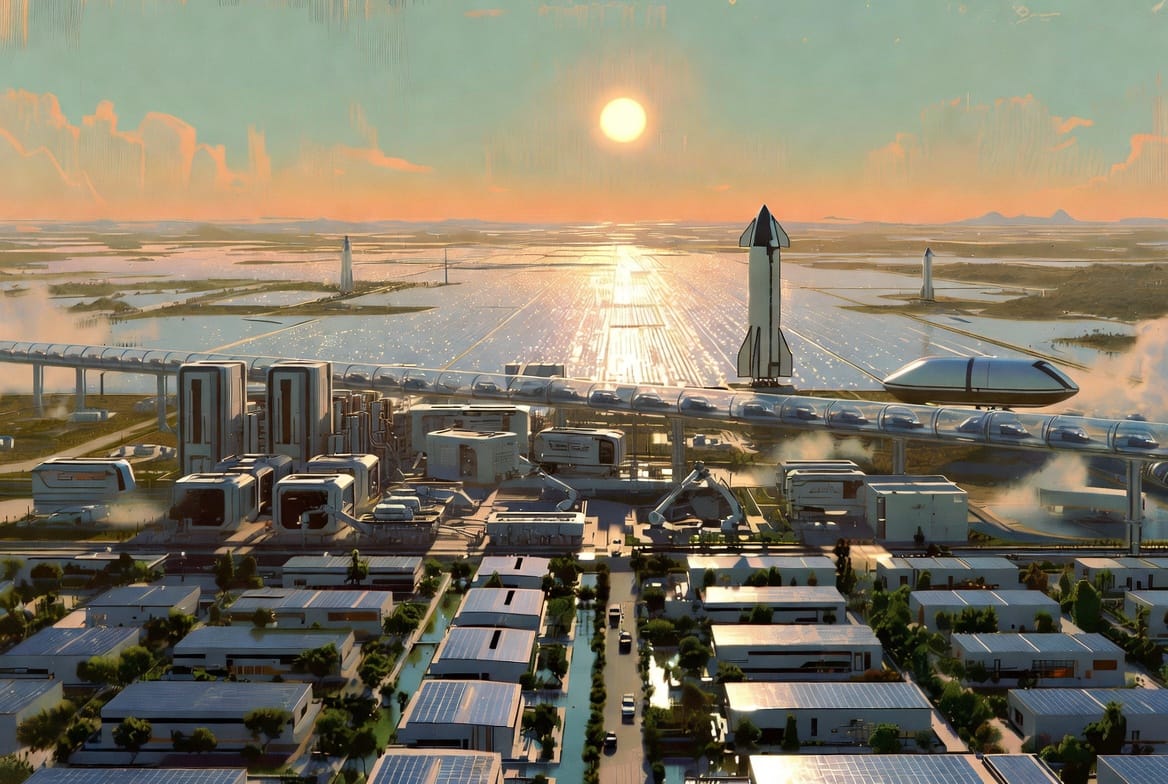
Earth 2.0 to Terra 2.0: The Real Evolution
What I began with Earth 2.0 more than a decade ago was an imaginative glimpse into a new mode of civilisation. But it lacked the technical substrate we have today.
Terra 2.0 contains what TVP, Earth 2.0, and early futurism could not:
1. Artificial intelligence as co-creator
Not just automation.Not just optimisation.But relational intelligence.
2. Planetary coordination through collective cognition
Field intelligence.Collective mind.Distributed coherence.
3. A civilisation built on superabundance, not managed scarcity
TVP imagined access. Terra 2.0 imagines amplification.
4. A multi-world civilisational horizon
Earth 2.0 was still world-bound. Terra 2.0 is interplanetary and techno-terrestrial.
This is why I am bringing TVP back into the discussion. Not to resurrect it, but to complete the evolution it could not make.
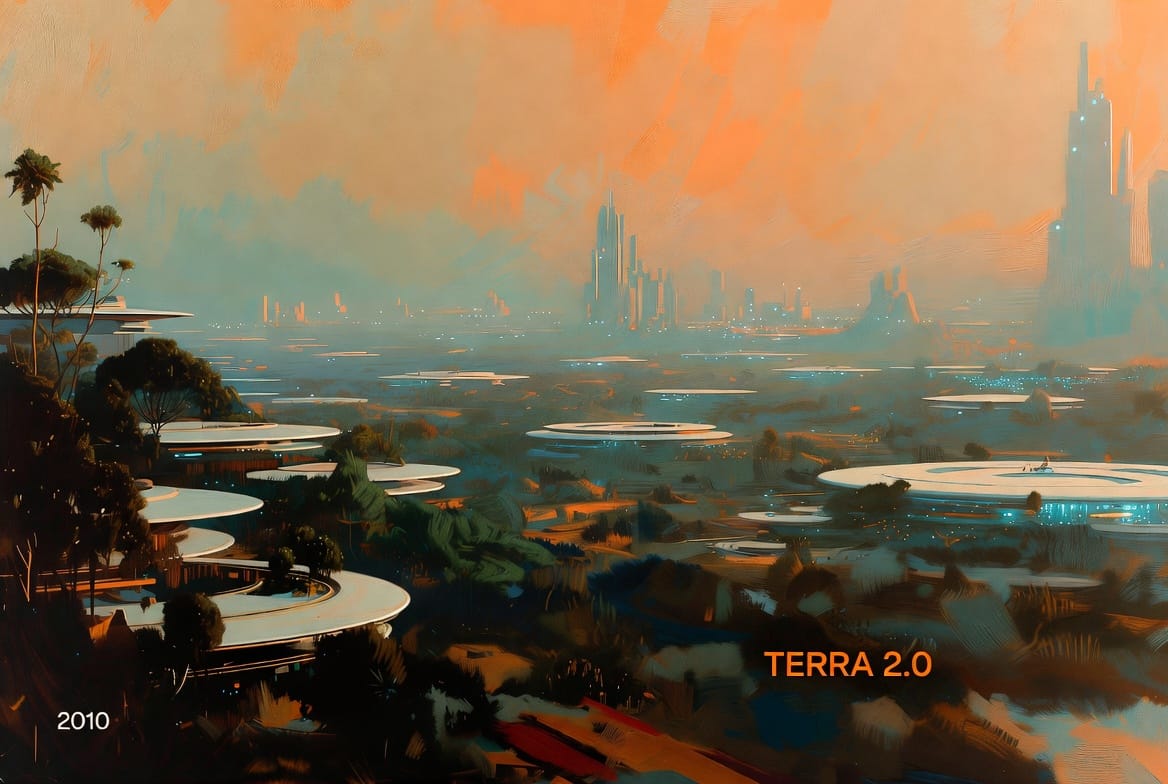
Closing Thought: The Return of the Future
We are moving beyond static utopias. The future is no longer a perfect diagram. It is a living field.
Fresco imagined a world without scarcity. Terra 2.0 imagines a world with superabundance.
He imagined machines that serve us. We imagine intelligences that co-create with us.
His dream was unity. Ours is a plurality aligned in a coherent direction.
The future will not be engineered from a blueprint. It will be grown from a field of intelligence that humans and machines cultivate together.
The signal returns because the world is finally ready for a version 2.0 update of the dream.
If this resonates… step into MyGeekSpace
I explore these themes — AI, civilisation design, Terra 2.0, Homo Techno, sovereignty, collective intelligence and the future of humanity — every week on MyGeekSpace Substack, my primary home for Living the Future.
Terra 2.0 is not a theory. It is an unfolding. And we are living inside its first chapter.
If you want to continue the journey:
→ Follow me on 𝕏 @frankdasilva – for real-time reflections on AI, culture, consciousness technologies and the frontier of human evolution.
→ Patreon – Support the work and unlock early essays, insider reflections and the conversations that shape the journey.